

Career path
The ABAP career ladder nobody wrote down
Job titles mean little across organizations. The sequence of capabilities underneath them is consistent — and worth planning against.
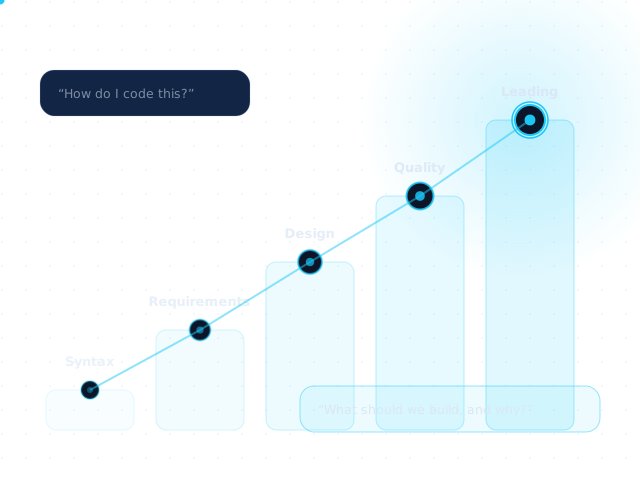
Nine steps, and where the difficulty really is
- 01Knowing syntaxQuick to learn; matters least later.
- 02Understanding requirementsThe first genuinely hard step.
- 03Understanding business processesUsually picked up by accident, over years.
- 04Making technical decisionsThe steepest transition on the ladder.
- 05Designing SAP solutionsThe question grows beyond one object.
- 06Writing maintainable developmentsOften learned after a bad experience.
- 07Reviewing qualityWhere you become useful to a team.
- 08Troubleshooting complex systemsThe most portable skill here.
- 09Leading technical solutionsCommunication wearing a technical hat.
Step four arrives without warning. Up to step three you follow instructions; from step four you’re accountable for a decision judged against a standard in your reviewer’s head. Most people who feel stuck are stuck here.
From developer to technical lead
- Explain the reason with every review comment
- Write design decisions down, including what you rejected
- Let people make reversible mistakes
- Standardise documents before code
Tools can write the code. The rest of the ladder is the job now.
Implementing a defined object list quickly is under pressure. Understanding what a business needs and changing a system safely isn’t — and reading unfamiliar ABAP with Code Analyzer is one of the fastest ways to build it.
Questions about career progression
Grow into the parts that don't automate.
Start with this week's requirement, and read the reasoning, not just the result.
No SAP connection. No template rewrites.